Creative tool comparison

Runway AI vs Midjourney: Choose the Right Creative Workflow

Runway AI vs Midjourney is less about naming one universal winner and more about matching the tool to your output. Runway AI is built around motion and video workflows, while Midjourney is strongest for still-image exploration.

The short verdict

Which tool wins for your goal?

Choose based on the asset you need to finish, not only on how impressive an individual generation looks.

Runway AI

Top pick

Best overall for video creation, motion experiments, and image-to-video work.

Works well

  • Designed around generative video and moving images
  • Supports a broader path from visual idea to edited sequence
  • Useful when timing, camera movement, and continuity matter
  • Better fit for creators publishing video-first work

Trade-offs

  • Video generations can require iteration and cleanup
  • Fine-grained control may vary by model and workflow
  • A still-image specialist may prefer a simpler image-first interface

Midjourney

Best for high-impact still images, style exploration, and visual concept development.

Works well

  • Excellent for rapid visual ideation and mood exploration
  • Strong fit for portraits, environments, poster concepts, and art direction
  • A large prompt community makes experimentation easier to study
  • Often reaches a compelling still-image direction quickly

Trade-offs

  • Not primarily a complete video production environment
  • Motion and temporal consistency are not its central strength
  • Turning a still concept into a finished video requires another tool

Dimension by dimension

Where the two tools differ

The practical distinction is simple: Midjourney generally starts with the still frame, while Runway AI generally starts with what that frame can become in motion.

Runway AI Midjourney
Primary strength Generative video, motion, and visual production workflows Still-image generation, visual exploration, and art direction
Best starting input Text, images, and visual references for moving output Text prompts and image references for still output
Motion control Central to the workflow, including movement and clip direction Secondary to the still-image result and usually needs another tool
Image ideation Useful for concepts that may continue into video Strong for rapid style, composition, and concept exploration
Production handoff Closer to a video-making pipeline from generation to sequence Usually requires a separate editor or animation tool for finished video
Consistency over time More relevant because the output is designed to move across frames Primarily judged within a single image or a set of still variations
Learning emphasis Prompting plus motion direction, references, and iteration Prompting, image references, variation, and style refinement
Ideal final asset A short clip, animated concept, social video, or cinematic shot A still illustration, concept frame, portrait, or visual moodboard

Choose by use case

Who should choose which tool?

Your preferred tool depends on whether the next decision in your process is about a finished frame or the behavior of that frame over time.

or

Option 1

Choose Runway AI when you need moving output

Start with a shot description, reference image, or visual concept and iterate toward a usable clip.

It keeps motion, timing, and video delivery closer to the center of the workflow.

or

Option 2

Choose Midjourney when you are still defining the look

Explore compositions, characters, environments, and visual directions before committing to production.

Its image-first process makes it efficient for generating and comparing creative directions.

or

Option 3

Use both when the project begins as art direction

Develop the key frame or visual language in Midjourney, then move the strongest direction into a video workflow.

The combination separates visual exploration from motion production instead of forcing one tool to do every job.

A practical model

The decision in four signals

These signals summarize the tradeoff without pretending that one generator is best for every creative brief.

Still-image exploration and video production call for different strengths.
2 creative lanes
Check output, motion, control, continuity, handoff, and learning effort before choosing.
6 workflow questions
Choose the tool that matches the asset you need to publish first.
1 next deliverable
The better choice changes with the brief, deadline, and required format.
0 universal winners

Know the limits

What this comparison cannot promise

Both platforms can produce striking results, but neither removes the need for creative direction, selection, and finishing work.

1

A strong prompt is not a finished production

Either tool can generate an appealing first result that still needs selection, editing, compositing, or brand adjustments.

What to do instead

Define a review step and judge outputs against the final deliverable, not the preview alone.

2

Still-image quality does not guarantee motion quality

A compelling Midjourney frame may not translate directly into a convincing animated shot, and a strong Runway AI frame may still need motion refinement.

What to do instead

Test the complete image-to-video or video-generation path with a small proof of concept.

3

Consistency can require several attempts

Characters, objects, lighting, and camera behavior may drift between variations or frames.

What to do instead

Use references, simpler shots, tighter prompts, and a deliberate selection process.

4

Neither tool replaces editorial judgment

The generator does not decide whether a shot supports the story, matches the audience, or belongs in the final cut.

What to do instead

Treat generation as an exploratory production stage and keep human review in the loop.

A visual way to think about it

From a polished frame to a moving shot

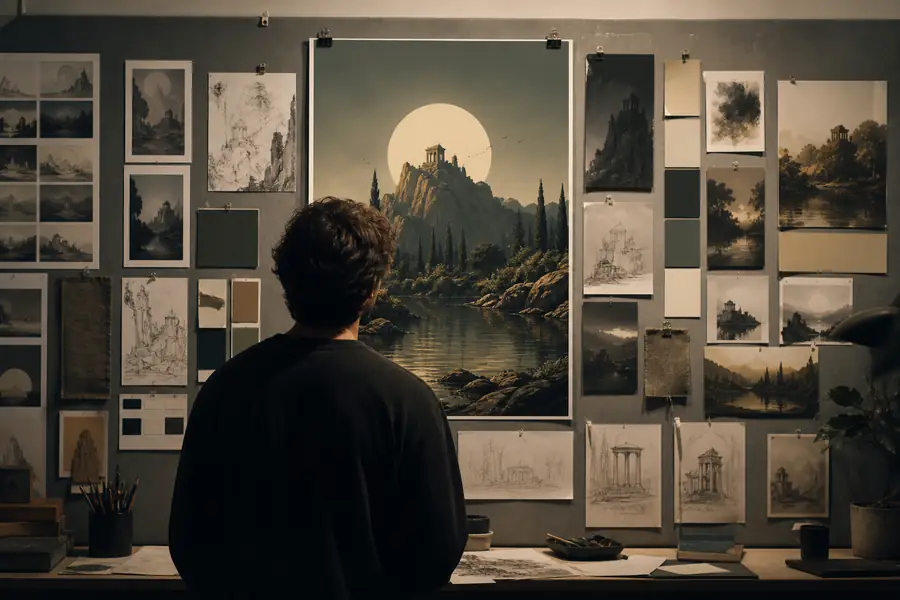
Still visual concept representing image-first exploration
Image-first direction
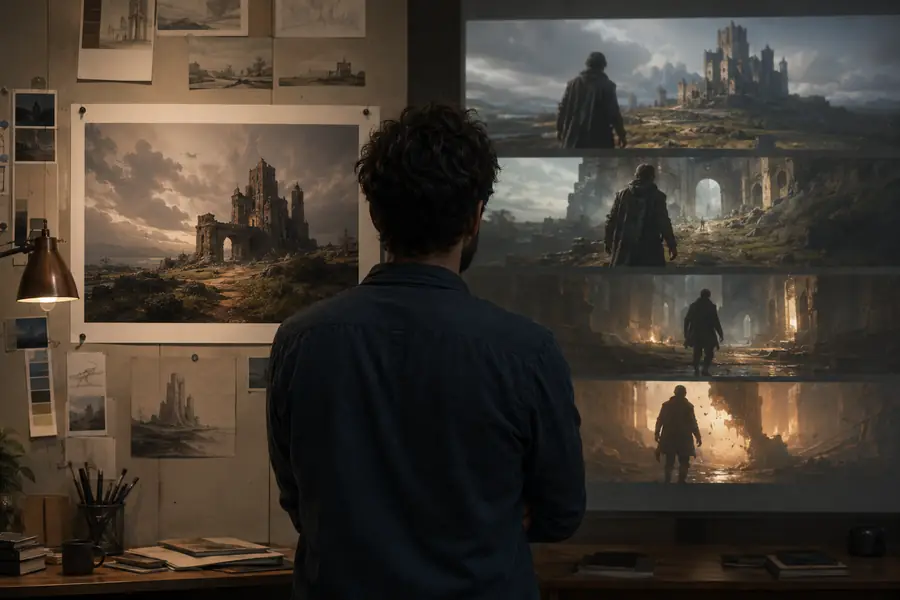
Motion-oriented visual concept representing video production
Video-first direction

Midjourney often helps define the frame; Runway AI helps explore what happens next.

Image-first directionVideo-first direction

Comparison FAQ

Is Runway AI better than Midjourney?

The answer depends on whether your priority is finished video, still-image exploration, or a workflow that uses both.

Runway AI is generally the better fit for generative video, motion experiments, and workflows that end in a clip. Midjourney is generally the better fit for still-image ideation, visual development, and style exploration. The better tool is the one that matches your intended output.

For image-first creative exploration, Midjourney may be the more natural choice because its workflow centers on still visuals and variations. Runway AI can still support image concepts, especially when those concepts are likely to continue into video.

Choose Runway AI when video is the required final format or when movement, timing, and shot direction matter. Midjourney can help create the visual direction or key-frame ideas, but a separate motion workflow is usually needed to turn still images into finished video.

Yes. A practical route is to explore characters, environments, or visual styles in Midjourney, then carry the strongest direction into Runway AI for motion and video iteration. This works best when you keep the visual references and creative constraints consistent across the handoff.

Try Runway
Try Runway